Gas Service

Gas Line Installation & Service in the Greater Toronto Area

Airrand provides gas piping for HVAC equipment, water heating, fireplaces and other approved gas appliances throughout Vaughan, North York, Richmond Hill, Toronto and surrounding GTA communities.

What Airrand Handles

Professional gas piping with sizing, routing and safety in mind.

Gas piping is not simply running a pipe from one point to another. The connected equipment, total fuel demand, route, material, supports, shutoffs, appliance requirements and testing all affect the final scope.

Airrand handles new gas-line installations, extensions, modifications and replacement-equipment connections for appropriate residential and commercial HVAC and mechanical applications.

  • New gas-line installations
  • Gas piping modifications and extensions
  • HVAC and water-heating equipment connections
  • Pressure testing and commissioning coordination

CSA Approved

Airrand follows applicable CSA standards, codes and manufacturer requirements for safe equipment installation and performance.

TSSA Insured

Gas, combustion and venting work is handled with TSSA compliance in mind, from planning through final checks.

HRAI Certified

Airrand applies recognized HVAC training, sizing, airflow and installation practices for responsible system work.

System Design

Gas Lines Have to Match the Equipment They Serve

Gas piping must be sized and routed based on the equipment connected to the system. Airrand reviews the practical requirements without turning the page into a DIY sizing guide.

Appliance Input Connected equipment has specific fuel-demand requirements.
Total Load New equipment can affect the entire connected gas system.
Pipe Length Longer runs can change piping requirements.
Pipe Diameter Pipe size must suit the connected load and system conditions.
Fuel Type Natural gas and propane systems have different requirements.
Existing Capacity Existing piping should be reviewed before equipment is added.
Pressure Supply conditions affect gas-fired equipment performance.
Fittings Turns and fittings are part of the overall piping design.
Equipment Location Access, clearances and serviceability affect routing.

Common Applications

Gas Piping for HVAC and Mechanical Equipment

Airrand supports gas piping for equipment that needs a properly planned fuel supply, clear access and safe commissioning.

Furnaces

Gas supply for residential and light-commercial heating equipment.

Water Heaters

Connections for conventional gas-fired water heaters.

Tankless Water Heaters

Gas supply sized for higher-input tankless equipment where required.

Boilers

Gas piping for hydronic heating equipment.

Gas Fireplaces

New or replacement gas connections for approved fireplace installations.

Garage Heaters

Gas piping for residential or light-commercial unit heaters.

Rooftop Units

Commercial gas connections for packaged rooftop equipment.

Make-Up Air / Commercial Equipment

Gas piping for mechanical systems where applicable.

Capacity

When Existing Gas Piping May Not Be Enough

Replacing or adding equipment can change gas demand. The existing gas line should be evaluated for total connected load and system capacity before new equipment is added.

Have Airrand Evaluate Your Gas System
Adding a tankless water heater
Adding a gas fireplace
Installing a larger furnace
Adding a garage heater
Adding commercial equipment
Replacing several appliances at once

Project Types

New Gas Line or Existing-System Extension?

Both project types need planning. The route, system capacity, supports, shutoffs and equipment requirements should be reviewed before installation.

New Gas Line

For new locations and new mechanical scope.

  • New equipment location
  • Renovation
  • Addition
  • Mechanical room changes
  • Commercial fit-out
  • New gas appliance

Routing, sizing, supports and shutoffs should be planned before installation.

Extend / Modify Existing Gas Line

For added, moved or replacement equipment.

  • New appliance added
  • Equipment relocated
  • Existing piping rerouted
  • Replacement equipment has different requirements

Existing pipe size and system capacity should be evaluated before extension.

Installation Standard

What Proper Gas Line Installation Actually Includes

A professional gas-line installation is planned, supported, connected, tested and commissioned as part of the larger mechanical system.

Proper Sizing

Gas piping should be sized for connected equipment and system conditions.

Approved Materials

Use materials suitable for the application and installation location.

Clean Routing

Route piping logically and avoid unnecessary complexity.

Proper Supports

Secure piping correctly and maintain a clean installation.

Shutoff Valves

Provide accessible appliance shutoffs where required.

Appliance Connections

Make appropriate final connections to the equipment.

Pressure Testing

Test gas piping as required before placing the system into service.

Equipment Setup

Verify appliance gas requirements and operation where part of the project.

Final Inspection / Commissioning

Complete checks before the installation is considered finished.

Verification

Gas Piping Should Be Tested Before It Is Put Into Service

New or modified gas piping needs to be checked for integrity before operation. Pressure testing confirms that the piping system holds appropriately before gas is introduced or equipment is operated.

Testing requirements depend on the installation and applicable code requirements.

Install
Test
Commission

Equipment Performance

Gas Supply Affects How Equipment Operates

Gas-fired equipment depends on proper supply conditions. Gas pressure and appliance setup should be verified according to the specific equipment requirements.

Airrand does not use universal pressure numbers as a substitute for reviewing the actual equipment and installation.

Poor burner performance
Ignition issues
Reduced equipment output
Lockouts
Unstable operation

Complete Installation

Gas Supply Is Only One Part of a Gas Appliance Installation

A gas-fired appliance also depends on venting, combustion air, drainage where applicable, electrical, controls and equipment clearances.

Gas Supply Fuel piping matched to the connected equipment.
Venting Exhaust routing appropriate for the appliance.
Combustion Air Air requirements considered where applicable.
Drainage Condensate or relief drainage where equipment requires it.
Electrical Power and disconnect needs coordinated with the equipment.
Controls Thermostats, safeties and equipment controls set up correctly.
Clearances Equipment and piping left serviceable and accessible.

A properly sized gas line does not compensate for incorrect venting or equipment setup.

Mechanical Rooms

Clean Gas Piping Makes Mechanical Rooms Better

Good mechanical-room piping should be straight, supported, serviceable, clearly routed, accessible and organized. The goal is a system that can be understood and serviced later.

Mechanical piping should look intentional, not improvised.
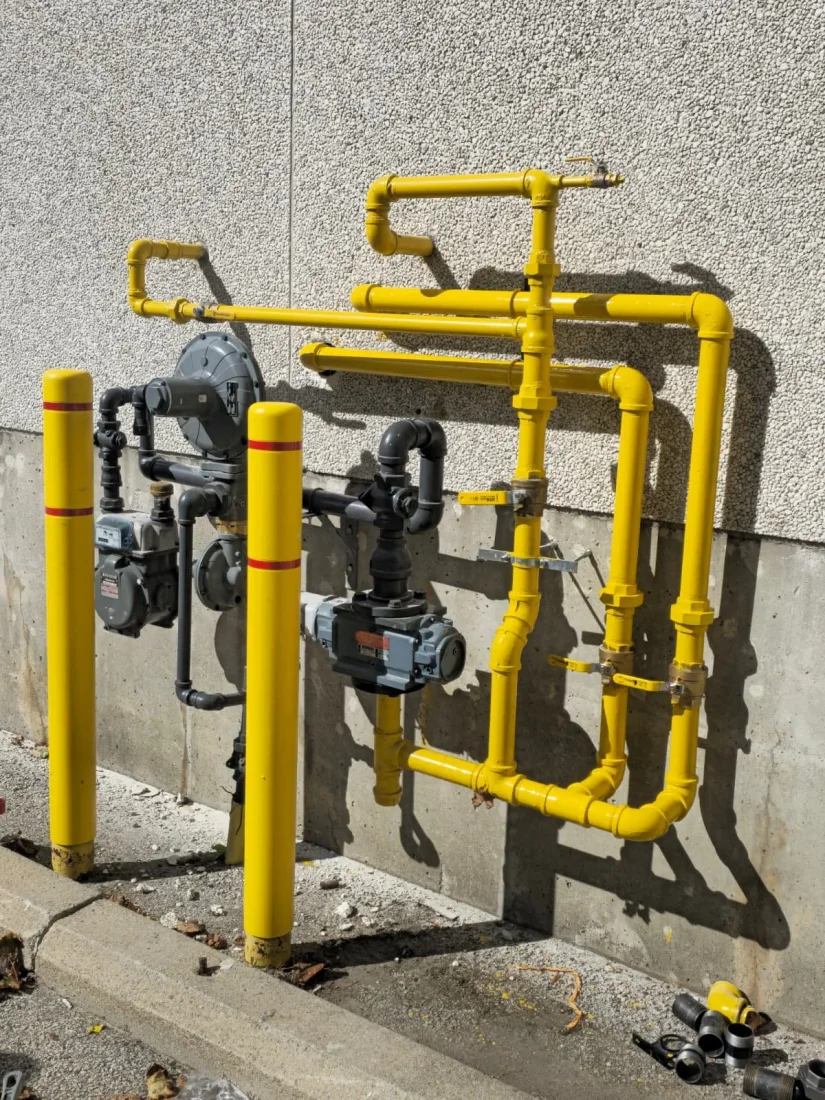
Gas line installation by Airrand
Recent Airrand gas and mechanical work.

Materials

Different Applications May Use Different Gas-Piping Materials

Depending on the installation, approved gas piping systems may use different materials. Selection depends on the location, application and applicable code requirements.

Black Steel / Black Iron

Common gas-piping material used in many mechanical installations.

CSST Where Permitted

Corrugated stainless steel tubing may be used in approved applications.

Approved Appliance Connectors

Final appliance connections should suit the equipment and location.

Other Approved Materials

Some applications require materials selected for specific conditions.

The material selected must be appropriate for the location, application and applicable code requirements.

Routing

Gas Piping Can Run Through Different Environments

Indoor and outdoor gas piping have different practical considerations. Airrand keeps this review high-level for customers and confirms the technical details on site.

Indoor

Mechanical rooms and finished spaces.

  • Protection
  • Supports
  • Access
  • Appliance location
  • Mechanical-room layout

Outdoor

Exterior routing and equipment locations.

  • Weather exposure
  • Corrosion protection
  • Supports
  • Routing
  • Equipment location

Diagnostics

Common Gas-Piping Issues We Encounter

These concerns should be evaluated by a qualified gas technician. The symptom is only the starting point for a proper review.

Capacity Undersized piping
Workmanship Poor routing
Serviceability Missing or inaccessible shutoffs
Condition Corrosion
Installation Unsupported pipe
Planning Appliance relocation issues
System load Equipment added without reviewing total load
Verification Leaks / failed testing
Connection Incorrect appliance connection
Access Mechanical-room piping that restricts service access

Gas-line concerns should be evaluated by a qualified gas technician.

Safety

If You Suspect a Gas Leak

  • Do not operate electrical switches or create ignition sources.
  • Leave the affected area.
  • Contact the gas utility or emergency services as appropriate from a safe location.
  • Do not attempt to locate or repair the leak yourself.

Equipment Upgrades

New Equipment Can Change Gas Demand

Modern equipment may have different gas-input requirements than the equipment being replaced. High-input tankless units, larger furnaces, boilers, garage heaters and commercial rooftop equipment should be reviewed before connection.

Airrand can evaluate

  • Whether existing piping is adequate
  • Whether a branch needs modification
  • Whether the main gas line needs changes
  • Whether equipment location affects routing

Capability

Residential Gas Work. Commercial Mechanical Capability.

Airrand supports gas piping as part of practical residential work and broader commercial HVAC/mechanical scopes.

Residential

Homes, renovations and equipment replacement.

  • Furnaces
  • Water heaters
  • Tankless
  • Fireplaces
  • Garage heaters
  • Renovations
  • Equipment relocation

Commercial

Mechanical rooms and commercial HVAC equipment.

  • Rooftop equipment
  • Make-up air units
  • Boilers
  • Mechanical rooms
  • Gas-fired unit heaters
  • Commercial water heating
  • Equipment replacement
Commercial HVAC

FAQ

Gas Lines FAQ

Common questions about gas-line installation, equipment connections, pressure testing and residential or commercial gas piping in the Greater Toronto Area.

Can Airrand run a new gas line?

Yes. Airrand can evaluate and install gas piping for appropriate HVAC equipment, water heating equipment and approved gas appliances, with the route, equipment load and installation requirements reviewed before work proceeds.

Can I add a gas fireplace to my existing gas system?

Possibly, but the existing gas system should be evaluated for capacity, routing, appliance requirements, shutoff location and the condition of the current piping before a fireplace connection is added.

Can I add a tankless water heater to my existing gas line?

Tankless equipment can have significant gas-input requirements. The existing piping, total connected load, equipment location and manufacturer requirements should be checked before installation.

Does changing furnace size affect the gas line?

Potentially. Equipment input and the total connected load on the gas system should be reviewed when a furnace is replaced with equipment that has different requirements.

Can gas lines be moved?

Yes, depending on the application and route. Relocation may involve pipe sizing, supports, shutoffs, appliance connections and required testing before the system is put back into service.

Why does gas-pipe size matter?

Pipe size affects the ability to deliver adequate gas to connected equipment. Appliance input, pipe length, fittings, pressure and total system load all influence whether a gas line is appropriate.

How do I know if my gas line is leaking?

Do not use DIY test methods. If you smell gas or suspect a leak, leave the area and contact the gas utility or emergency services as appropriate from a safe location.

Can Airrand pressure-test gas piping?

New or modified gas piping can require testing before commissioning. Testing requirements depend on the installation and applicable code requirements.

Can Airrand install gas lines outdoors?

Outdoor piping can be used in appropriate applications with suitable materials, protection, supports and routing. The installation location and equipment requirements need to be reviewed.

Does Airrand work on commercial gas piping?

Yes, for appropriate commercial HVAC and mechanical applications such as rooftop equipment, make-up air units, boilers, unit heaters, mechanical rooms and commercial water-heating equipment.

24/7 Service Available

Need gas piping reviewed or installed?

Share the equipment, property type, location and photos so Airrand can review the gas-line scope and recommend the right next step.

Call Request Quote